動詞文法 | 加 to V 還是 V-ing,動詞整理表
2025.01.03|2026.08.27
分辨句子後面接 to + 動詞原形(不定詞)還是 動名詞(V-ing),主要取決於前面的動詞、片語或表達的習慣用法。
- 表目的(目的不定詞):
- I went to the store to buy milk. (我去商店買牛奶。)
- She studies hard to pass the exam. (她努力學習以通過考試。)
- 某些特定動詞後通常接不定詞:
- Agree:She agreed to help us.(她同意幫助我們。)
- Decide:He decided to leave early.(他決定早點離開。)
- 某些特定形容詞後:
- Happy:I'm happy to meet you.(很高興見到你。)
- Eager:She is eager to start the project.(她渴望開始這個專案。)
- Ready:We are ready to go.(我們準備好出發了。)
- 作為句子的主詞或受詞:
- Reading is fun. (閱讀很有趣。) (作主詞)
- She enjoys swimming . (她喜歡游泳。) (作受詞)
- 某些特定動詞後面通常接動名詞:
- Enjoy:They enjoy hiking.(他們喜歡健行。)
- Avoid:He avoids eating junk food.(他避免吃垃圾食物。)
- 介系詞後方一律接動名詞:
- She is good at dancing . (她擅長跳舞。)
- He left without saying goodbye. (他沒說再見就離開了。)
- 特定習慣片語後(此時的 to 為介系詞):
- Look forward to:I look forward to meeting you.(我期待與你相見。)
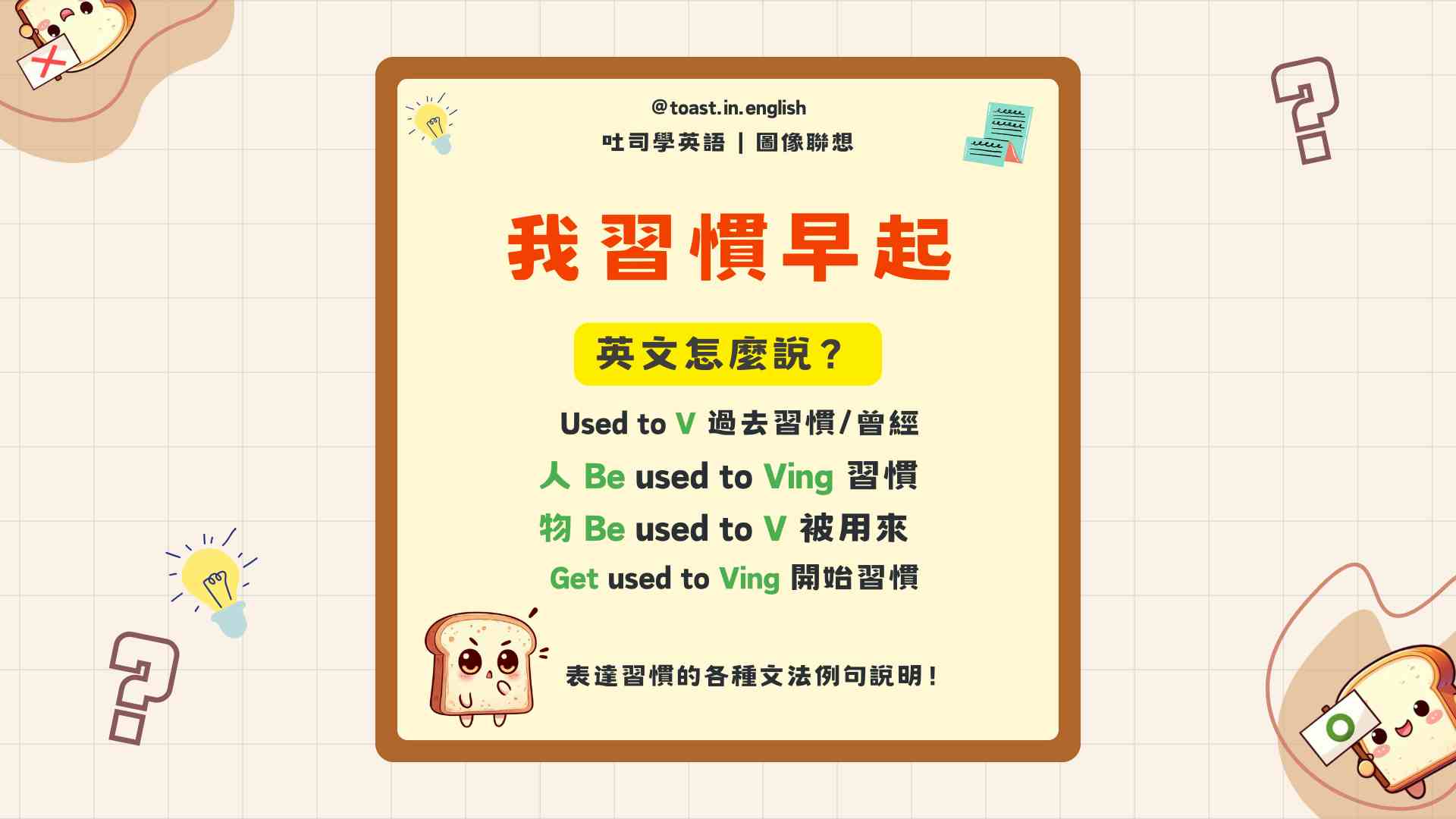
- Be used to:She is used to getting up early.(她習慣早起。)
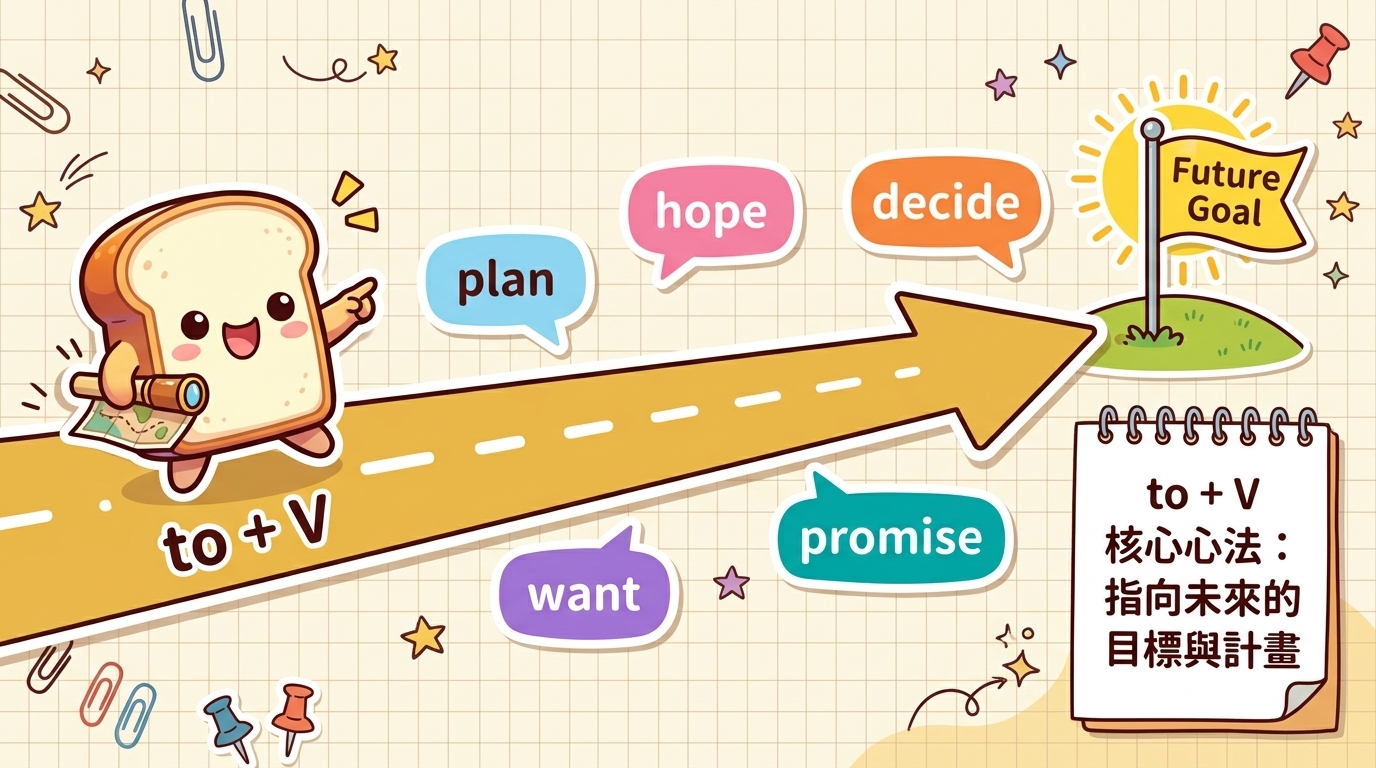
這類動詞大多表達某人「希望」、「打算」或「計畫」在未來做某件事。
| 動詞 | 英文例句與發音 | 記憶重點 |
|---|---|---|
| agree | She agreed to help us.(她同意幫助我們。) | 同意的是未來的行為,加 to。 |
| decide | He decided to leave early.(他決定早點離開。) | 決定是對未來的行動做出選擇,加 to。 |
| plan | They plan to visit Europe.(他們計劃去歐洲旅行。) | 計畫是對將來的行動安排,加 to。 |
| hope | We hope to see you soon.(我們希望很快見到你。) | 希望未來發生的事情,加 to。 |
| want | I want to learn French.(我想學法語。) | 表達對未來的強烈需求與願望,加 to。 |
| promise | She promised to call me.(她答應打電話給我。) | 對未來行動的承諾,加 to。 |
| expect | They expect to arrive at noon.(他們預計中午到達。) | 預期的行為將在未來發生,加 to。 |
| refuse | He refused to cooperate.(他拒絕合作。) | 拒絕未來的某個行動,加 to。 |
| offer | She offered to help with the project.(她主動提出幫忙這個專案。) | 主動提出未來的行動,加 to。 |
| manage | He managed to finish the report on time.(他設法按時完成了報告。) | 設法努力達成目標行動,加 to。 |
| fail | She failed to understand the instructions.(她未能理解指示。) | 未能達成某行動,加 to。 |
| pretend | He pretended to be asleep.(他假裝睡著了。) | 假裝模擬某種狀態,加 to。 |
| choose | She chose to study law.(她選擇學習法律。) | 對未來行動做出選擇,加 to。 |
| seem | He seems to know everything.(他似乎知道一切。) | 對狀態或行為進行猜測,加 to。 |
| arrange | They arranged to meet at the cafe.(他們約好在咖啡館見面。) | 安排未來的行動,加 to。 |
| afford | We can't afford to buy a new car.(我們買不起新車。) | 能夠負擔未來的行動,加 to。 |
| attempt | She attempted to solve the problem.(她試圖解決這個問題。) | 嘗試未來的行動,加 to。 |
| prepare | They prepared to leave early.(他們準備早點離開。) | 準備未來的行為,加 to。 |
| appear | He appeared to be nervous.(他顯得很緊張。) | 表現出的狀態,加 to。 |
| hesitate | Don't hesitate to ask for help.(不要猶豫,隨時求助。) | 對未來的行動猶豫,加 to。 |
| aim | She aims to become a doctor.(她志在成為一名醫生。) | 朝向未來目標的行動,加 to。 |
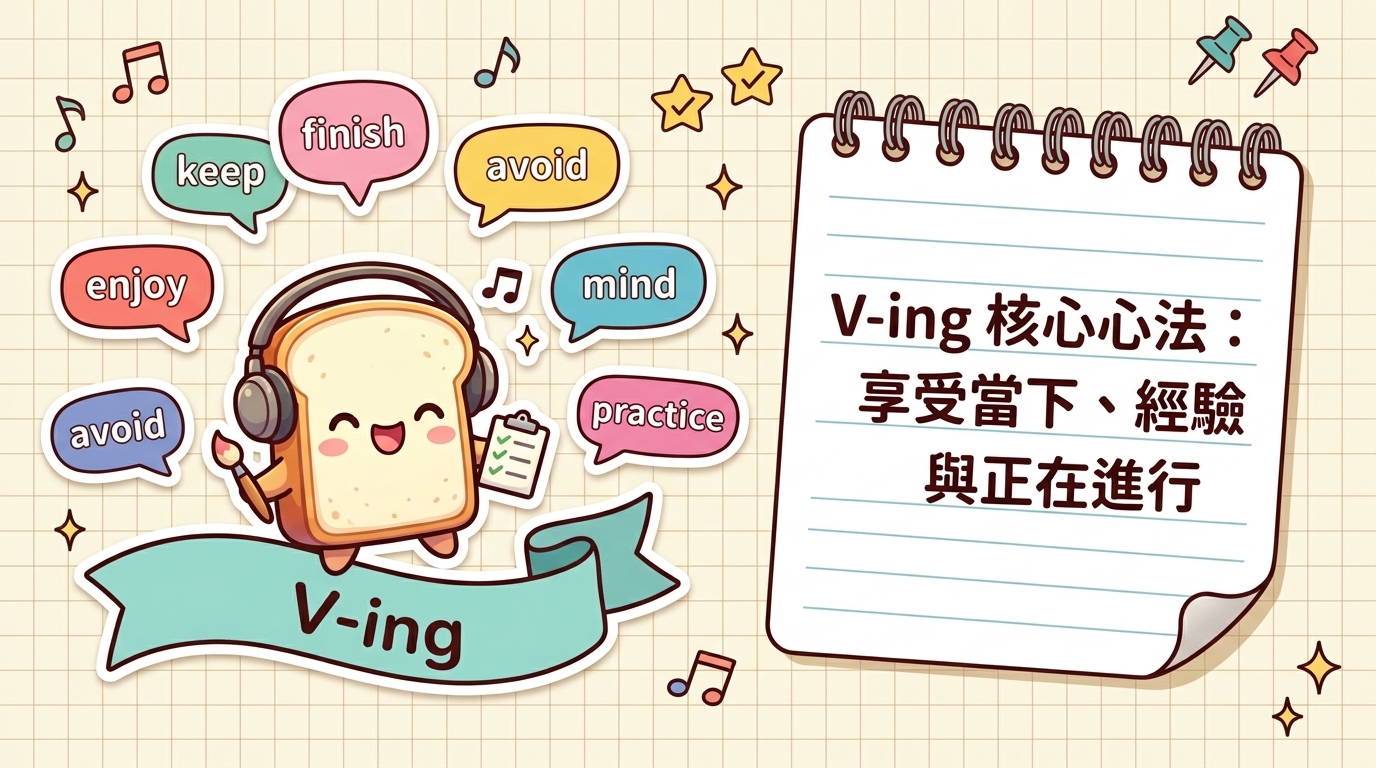
這類動詞大多表達「享受體驗」、「已經歷過」、「避免/抗拒」或「停止/完成」某個動作。
| 動詞 | 英文例句與發音 | 記憶重點 |
|---|---|---|
| admit | She admitted breaking the vase.(她承認打破了花瓶。) | 承認已經發生過的事,後接 V-ing。 |
| avoid | He avoided answering my question.(他避免回答我的問題。) | 避開某個行為或動作,後接 V-ing。 |
| consider | They considered moving to another city.(他們考慮搬到另一個城市。) | 考慮進行中的事情,後接 V-ing。 |
| delay | He delayed making the decision.(他推遲了做決定。) | 延遲某個行為,後接 V-ing。 |
| deny | She denied stealing the money.(她否認偷錢。) | 否認已經做過的事,後接 V-ing。 |
| enjoy | We enjoy playing tennis.(我們喜歡打網球。) | 享受正在體驗的行為,後接 V-ing。 |
| finish | He finished reading the book.(他讀完了那本書。) | 完成某個動作行為,後接 V-ing。 |
| imagine | Can you imagine living on the moon?(你能想像在月球上生活嗎?) | 想像某種生活狀態或情境,後接 V-ing。 |
| involve | The job involves traveling.(這份工作涉及出差旅行。) | 包含某個行為項目,後接 V-ing。 |
| keep | She kept talking during the movie.(她在看電影時一直說話。) | 持續進行某個動作,後接 V-ing。 |
| mention | He mentioned going to the party.(他提到要去參加聚會。) | 提到某個事件行為,後接 V-ing。 |
| mind | Would you mind opening the window?(你介意打開窗戶嗎?) | 介意某個動作行為,後接 V-ing。 |
| miss | I miss seeing my friends.(我想念見到我的朋友們。) | 想念過去常做的事,後接 V-ing。 |
| postpone | They postponed having the meeting.(他們延後了會議。) | 延期某個已安排的活動,後接 V-ing。 |
| practice | She practices playing the piano every day.(她每天練習彈鋼琴。) | 練習某項技能動作,後接 V-ing。 |
| quit | He quit smoking last year.(他去年戒菸了。) | 停止某個習慣動作,後接 V-ing。 |
| recommend | They recommended visiting the museum.(他們建議參觀這座博物館。) | 推薦某項體驗活動,後接 V-ing。 |
| resist | I couldn't resist eating the chocolate.(我忍不住吃了巧克力。) | 抗拒某個動作誘惑,後接 V-ing。 |
| risk | She risks losing her job.(她冒著失去工作的風險。) | 承擔某個結果的風險,後接 V-ing。 |
| suggest | He suggested going to the movies.(他建議去看電影。) | 提出某個行動建議,後接 V-ing。 |
有些動詞後方接 to V 或 V-ing 皆可,但語意截然不同,是英語學習中最容易混淆的關鍵考點!
| 動詞 | 搭配型態 | 英文例句與發音 | 語意差異解析 |
|---|---|---|---|
| Remember | + to V | Remember to lock the door.(記得要鎖門。) | 記得去做某事(未來的行動) |
| + V-ing | I remember meeting her last year.(我記得去年見過她。) | 記得做過某事(過去的記憶) | |
| Stop | + to V | He stopped to smoke.(他停下來去抽菸。) | 停下手邊動作,去進行另一件事 |
| + V-ing | He stopped smoking.(他戒菸了。) | 停止 / 戒除正在做的事 | |
| Forget | + to V | Don't forget to call me.(別忘了打電話給我。) | 忘記去做某事(該做卻忘了做) |
| + V-ing | I forgot meeting him before.(我忘記曾見過他。) | 忘記做過某事(遺忘了過去的經驗) | |
| Try | + to V | I tried to pass the exam.(我努力嘗試通過考試。) | 努力、設法去達成某個困難目標 |
| + V-ing | Try drinking this herbal tea.(試試看喝這杯花草茶吧。) | 嘗試看看、試驗某種做法或方法 |
有些動詞接不定詞或動名詞時,語意幾乎沒有差別,可隨意替換使用:
| 動詞 | + to V 例句與發音 | + V-ing 例句與發音 | 中文意思 |
|---|---|---|---|
| Begin | She began to cry.(她開始哭了。) | She began crying.(她開始哭了。) | 開始(哭泣) |
| Start | It started to rain.(天開始下雨了。) | It started raining.(天開始下雨了。) | 開始(下雨) |
| Continue | He continued to work.(他繼續工作。) | He continued working.(他繼續工作。) | 繼續(工作) |
在以下片語中,to 是「介系詞」而非不定詞標記!因為介系詞後方必須接名詞或動名詞,所以後面一定要加 V-ing:
| 片語結構 | 英文例句與發音 | 中文解析 |
|---|---|---|
| Be accustomed to | She is accustomed to working late.(她習慣於加班。) | 習慣於某個行為模式 |
| Be committed to | They are committed to improving customer service.(他們致力於改善客戶服務。) | 致力於達成某項目標 |
| Look forward to | I look forward to meeting you.(我期待與你相見。) | 期待某件事的到來 |
| Be opposed to | She is opposed to changing the policy.(她反對改變這項政策。) | 反對某個做法或提案 |
| Be used to | He is used to getting up early.(他習慣早起。) | 習慣於某種日常狀態 |
to + V:偏向未來、目的、計畫、承諾(如 want, hope, plan, decide)。V-ing:偏向經驗、正在進行、已發生、享受或停止(如 enjoy, finish, avoid, mind)。to + V-ing:注意片語中的to是否為介系詞(如 look forward to, be used to)。
透過分類與例句反覆熟悉,就能自然掌握動詞接法的語感囉!
🎉 恭喜你讀到文章結尾!這是吐司君今天的學習內容,希望對你有幫助。 
內容勘誤 / 問題回報
每一份回饋,都是讓吐司君進步的動力 ✨
這裡的內容是吐司君在自學路上的點滴紀錄,雖然盡力校對,但個人力量有限難免疏漏。如果你發現翻譯錯誤、連結失效,或有任何想對本站的建議,誠摯邀請你提點。
* 部分範例句子由 AI 協助生成,建議閱讀時搭配權威詞典多方求證。